Skip to content

Open source · Apache-2.0 · Self-hosted

Follow a story across social, news and radio

Social Explorer brings posts, news events and broadcasts into one database, scores them for sentiment, topics and language, and gives you a workbench to find out what is driving the conversation.

No accounts or API keys. One command, about five minutes.

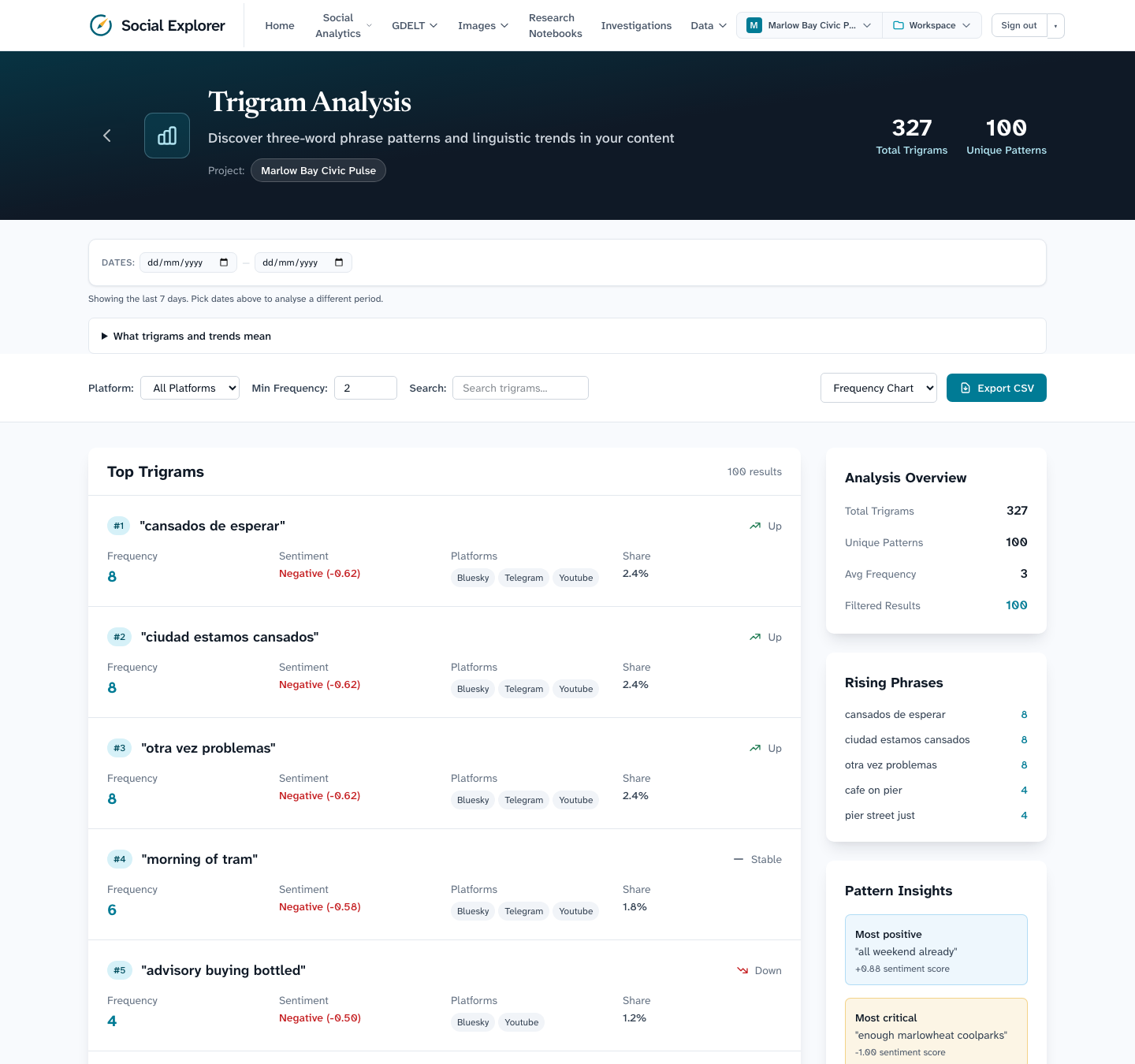
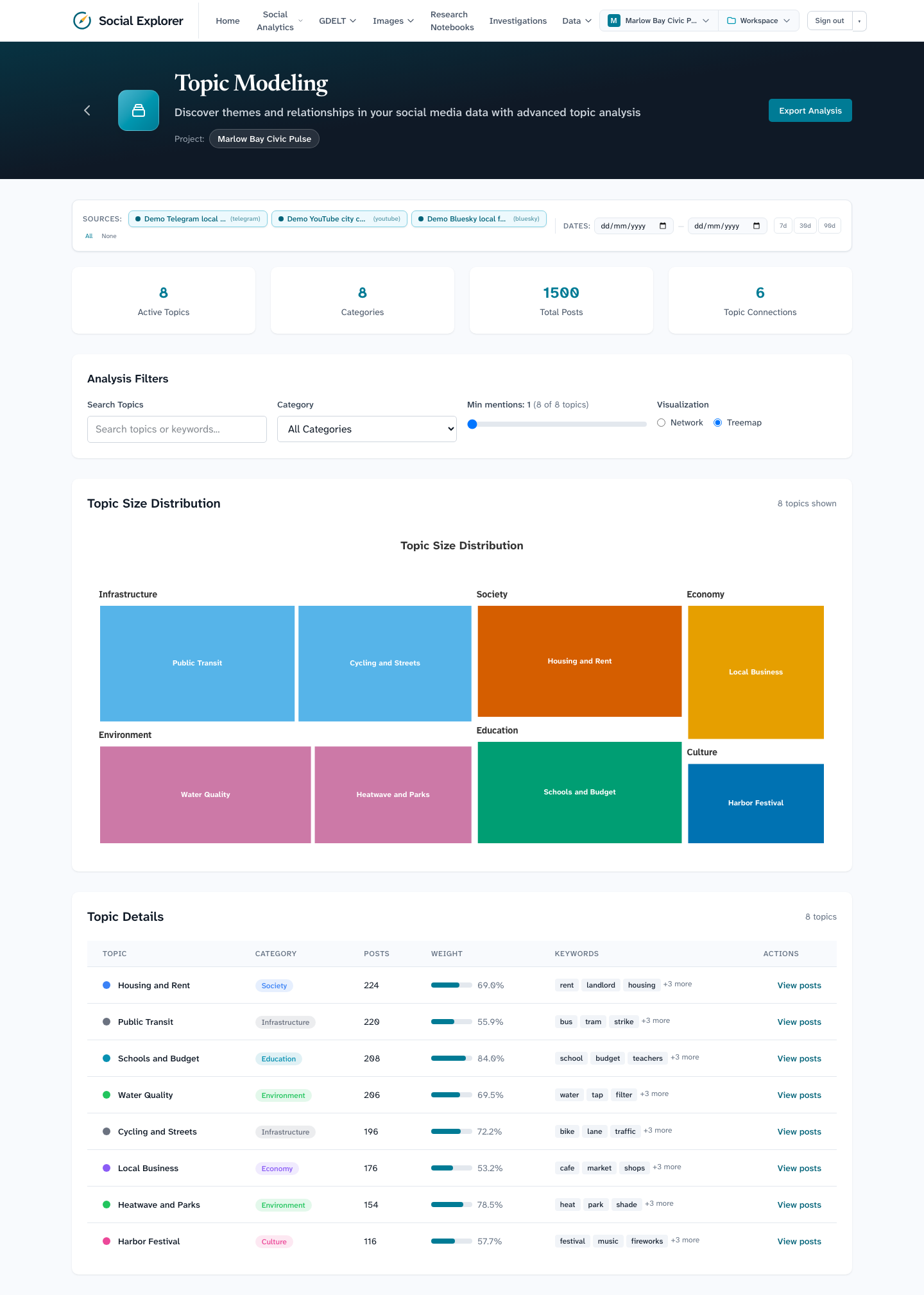
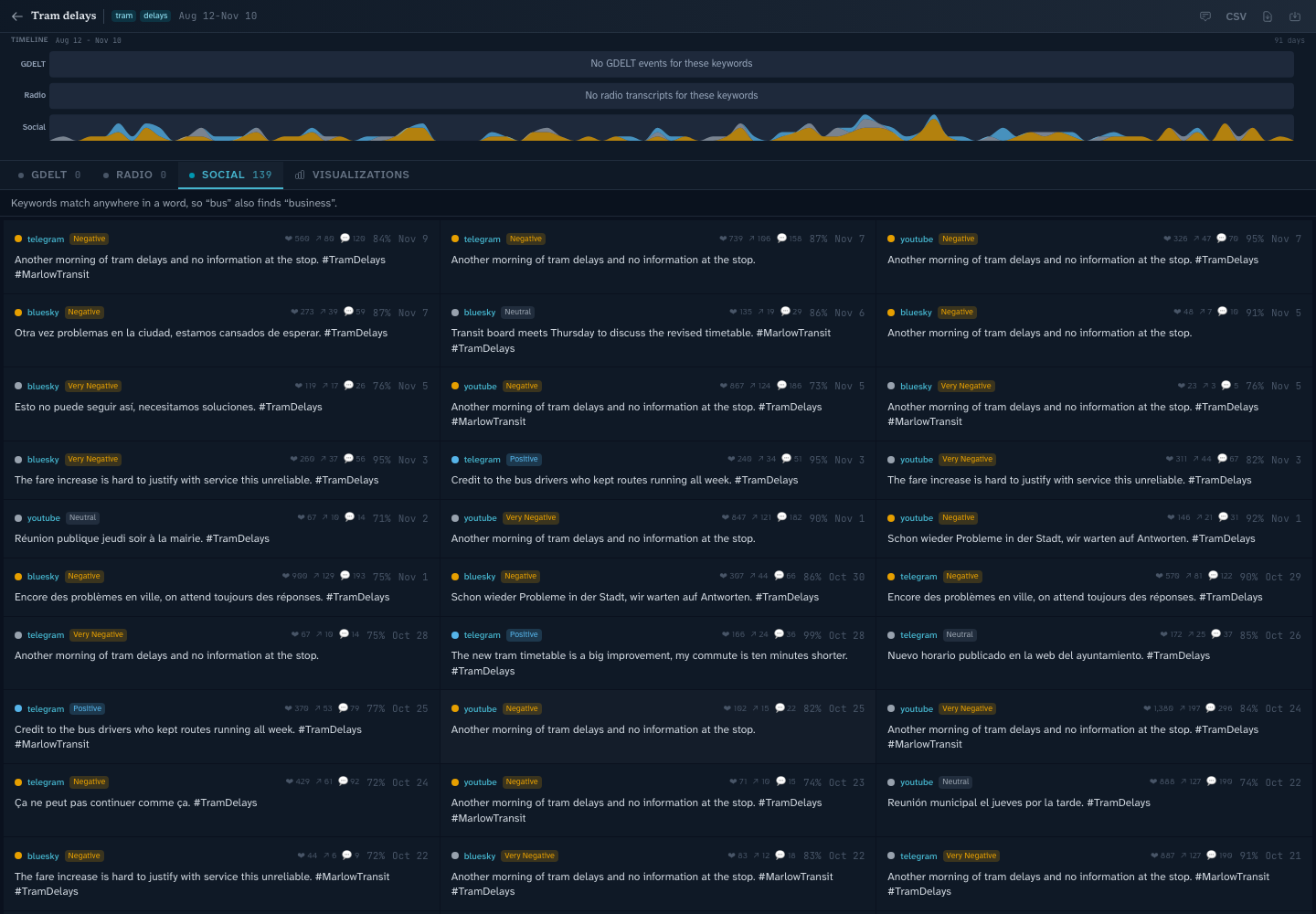
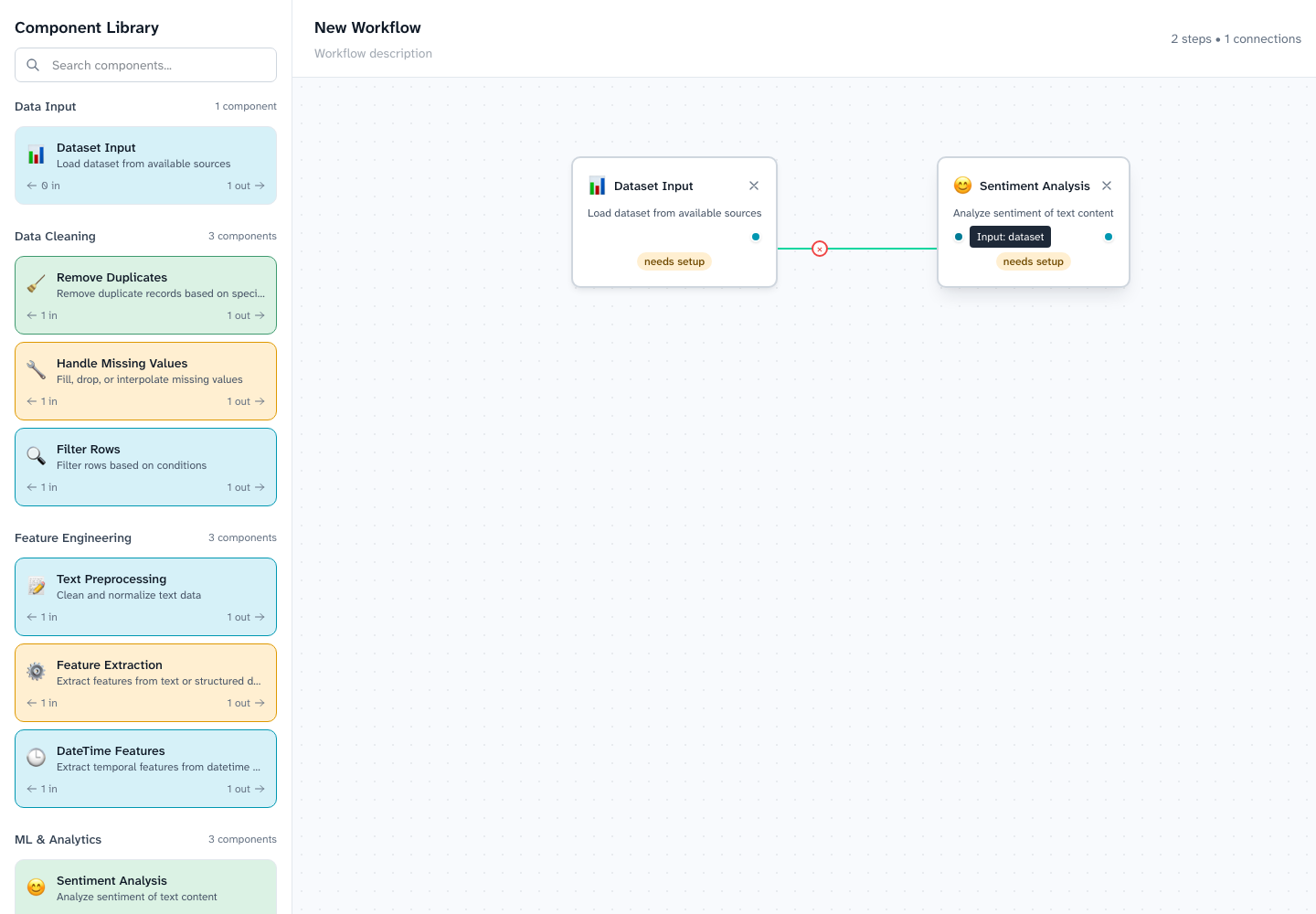
Sentiment analysis dashboard: positive, negative and neutral shares, emotion breakdown and trend over timeTopic modelling page with a topic network and a table of topics, weights and keywordsInvestigation workbench with a timeline across GDELT, radio and social posts and a feed of matching postsVisual workflow builder connecting a dataset input to sentiment analysis

Screenshots use synthetic demo data about a fictional city.

From raw posts to an answer you can defend

1

Collect

Bring posts in from Telegram, YouTube and Bluesky, pull GDELT news events, load your own datasets and capture radio with transcription.

2

Analyse

Sentiment, emotion, topics and language for every post, with engagement, hashtag and phrase analysis on top.

3

Investigate

Group work into projects and workspaces, then follow a keyword across social, news and radio on one timeline.

Sentiment and emotion

Know how people feel, and when it turned

See the positive, negative and neutral split and the emotions behind it. Filter by source, then read the individual posts and the confidence behind each label.

  • Positive, negative and neutral share at a glance
  • Compare Telegram, YouTube and Bluesky
  • Read the posts behind the numbers, with a confidence score for each
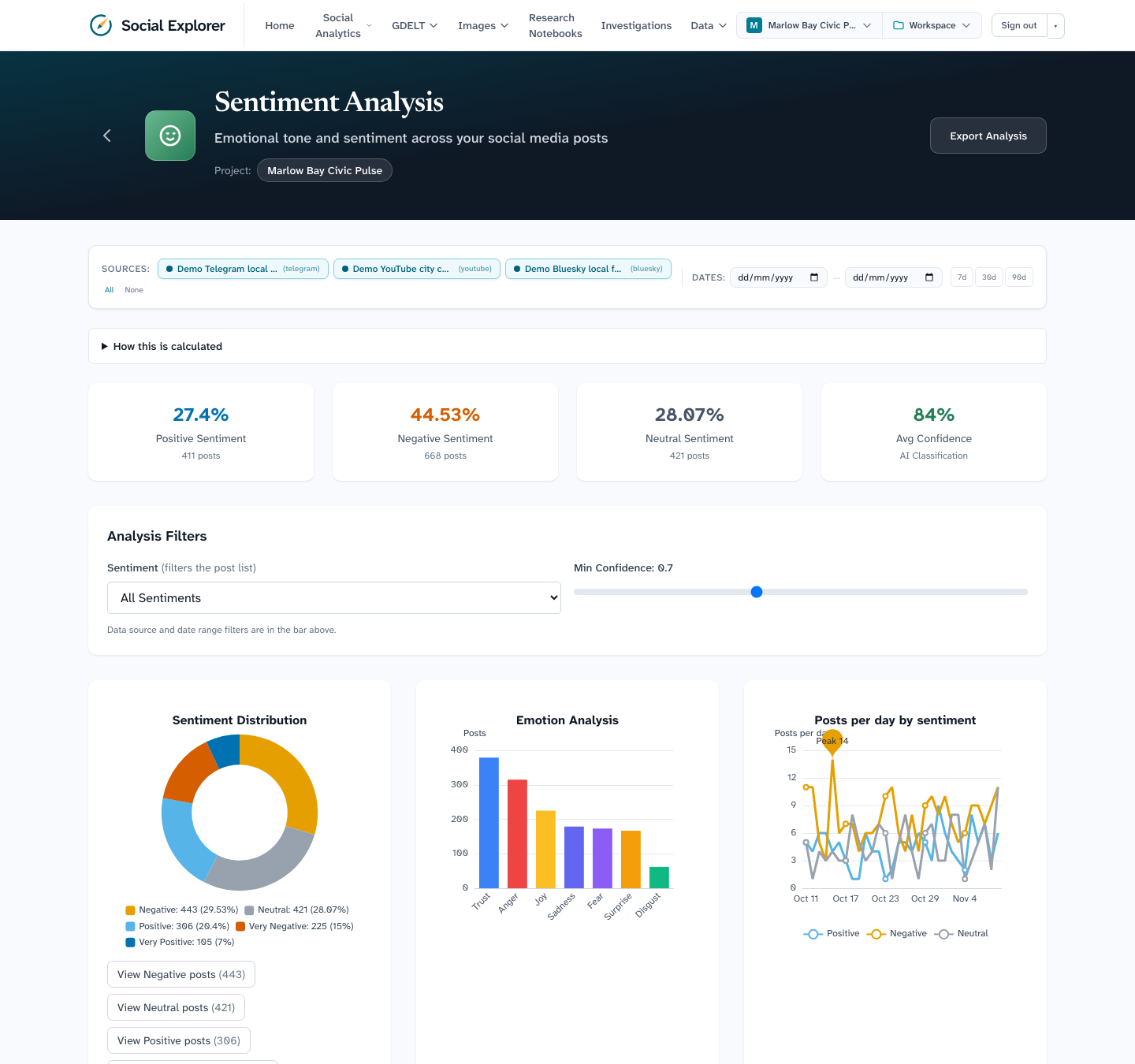
Sentiment analysis dashboard

Topic modelling

Find the themes you did not search for

Topics are surfaced from the data itself, with their volume, weight and keywords, so you can see what a community is actually talking about before you decide what to dig into.

  • Topics ranked by number of posts
  • Keywords and weight for each topic
  • Network and treemap views
Topic modelling page

Investigations

Follow a story across social, news and radio

Name the keywords and the dates, and the workbench lines up matching social posts, GDELT news events and radio segments on one timeline, with the posts themselves underneath.

  • Social, GDELT and radio lanes on one timeline
  • Expand any post for engagement, sentiment and emotion
  • Export the evidence set as JSON
Investigation workbench

Notebooks and workflows

Go deeper in code when you need to

Open the built-in Jupyter notebooks against the same database as the dashboards, or sketch an analysis in the visual workflow builder, which is an early preview.

  • Starter notebooks for GDELT, sentiment and topics
  • Same database as the dashboards
  • Visual workflow builder (early preview)
Workflow builder

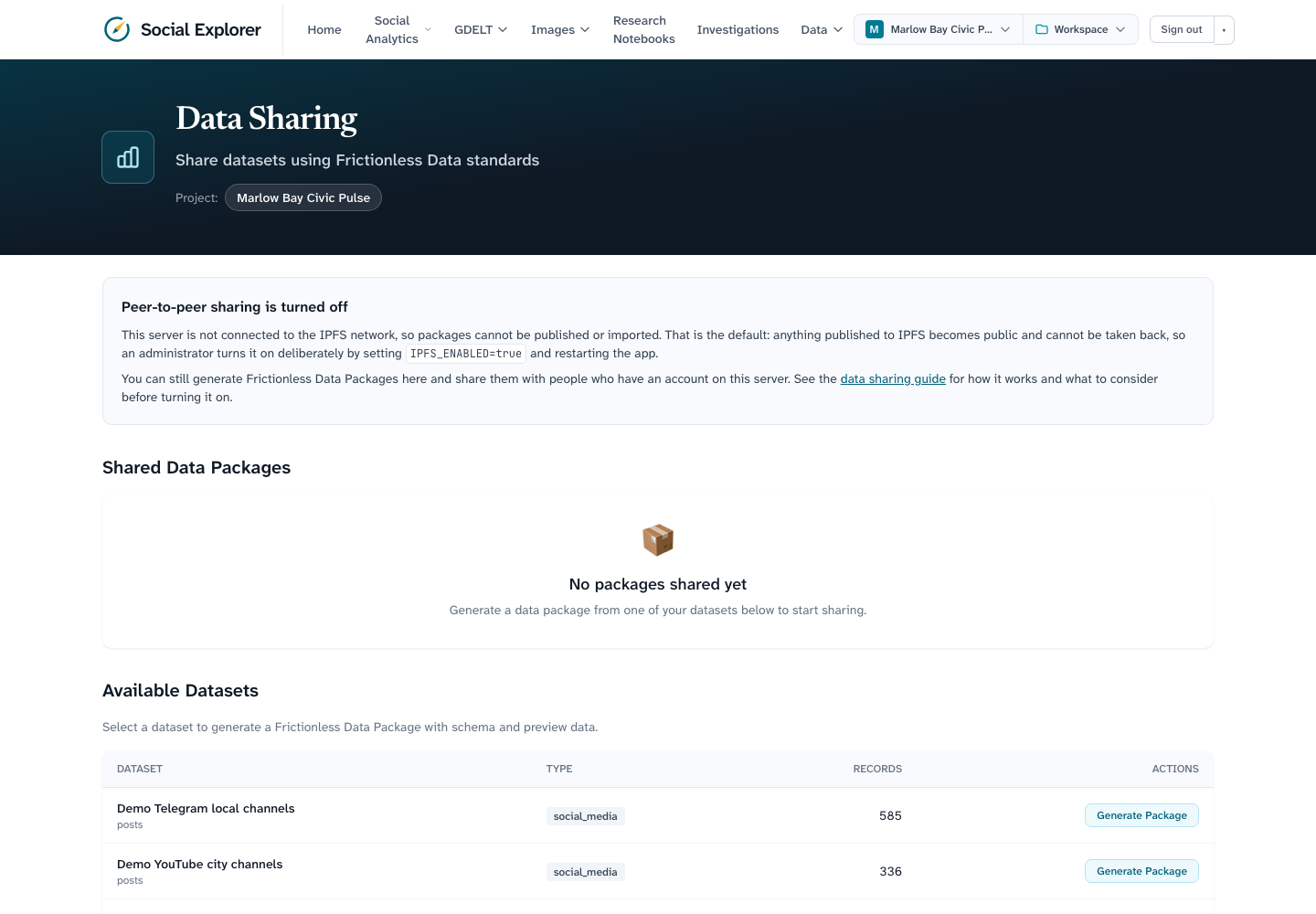
Data sharing (optional)

Give a collaborator the exact dataset you published

Publish a dataset as an open Frictionless Data Package over the IPFS network and send one content ID. A collaborator, a reviewer or a replication package gets the same bytes you published, from any IPFS node or public gateway, with no account, while your node or someone who pinned it is online. The ID always resolves to the same bytes, so a paper can cite the exact version and any change gives a new ID. It is off by default, and what you publish is public for good, so it is for open data only.

  • A plain CSV (opens in Python, R or Excel) plus a datapackage.json schema
  • Import a colleague’s package by ID into a table you can query
  • Opt-in, admin-only, and never for personal data
Data Sharing page with peer-to-peer sharing turned off, the default, no packages yet, and the catalogued datasets a package can be generated from

And the views you reach for next

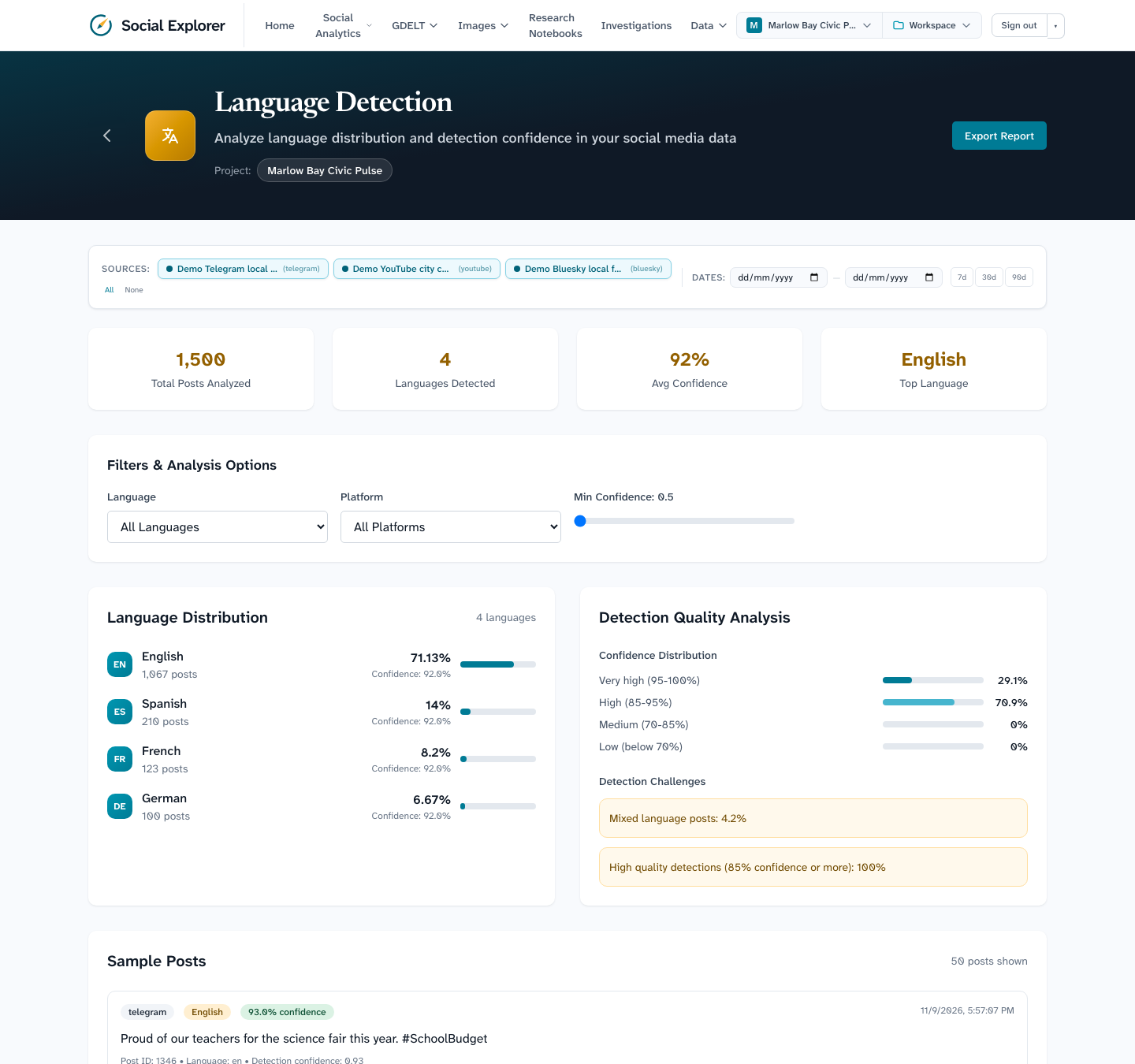
Language detection

Language detection

Which languages a conversation is happening in.

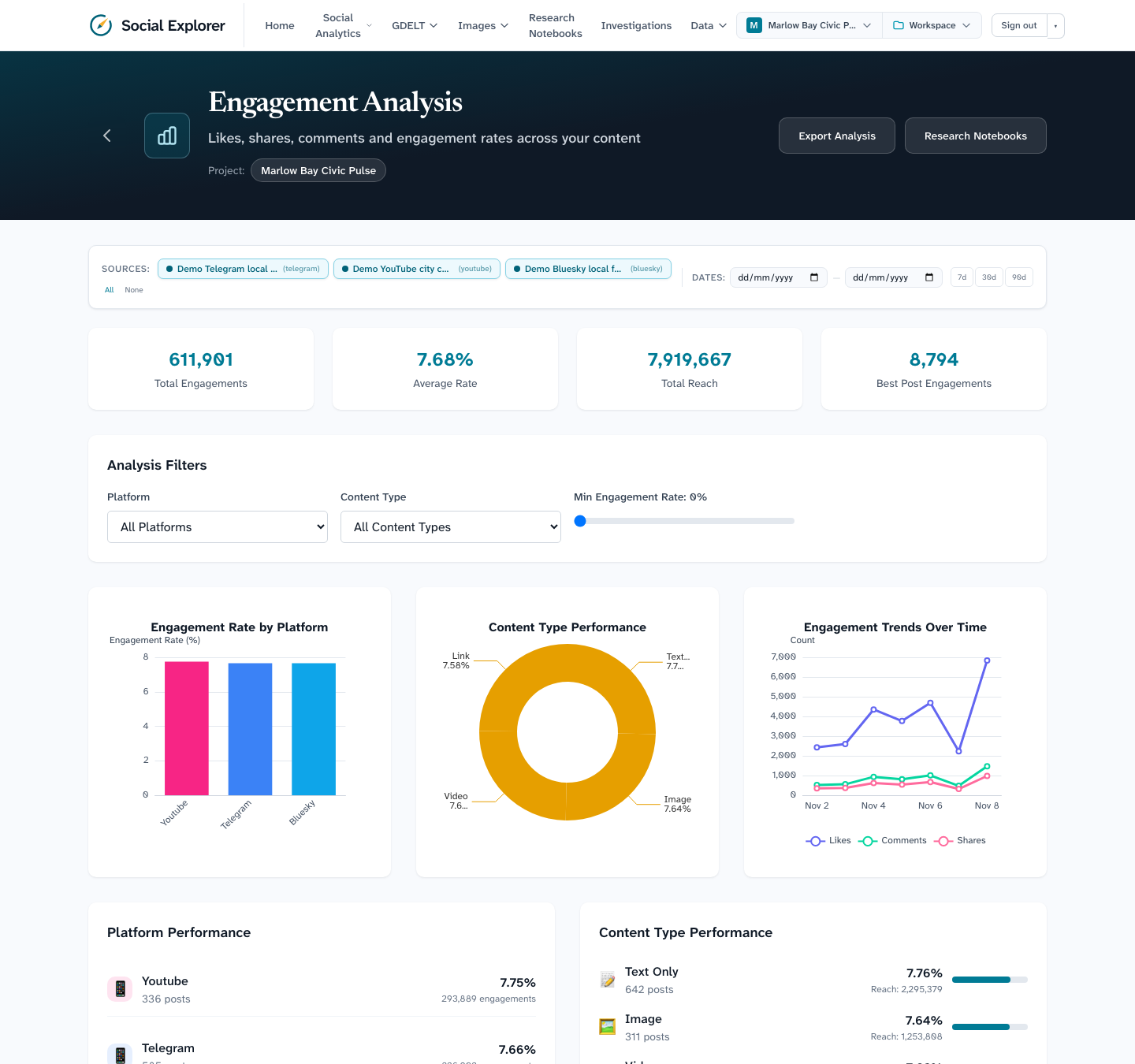
Engagement

Engagement

What gets likes, shares and replies, and from whom.

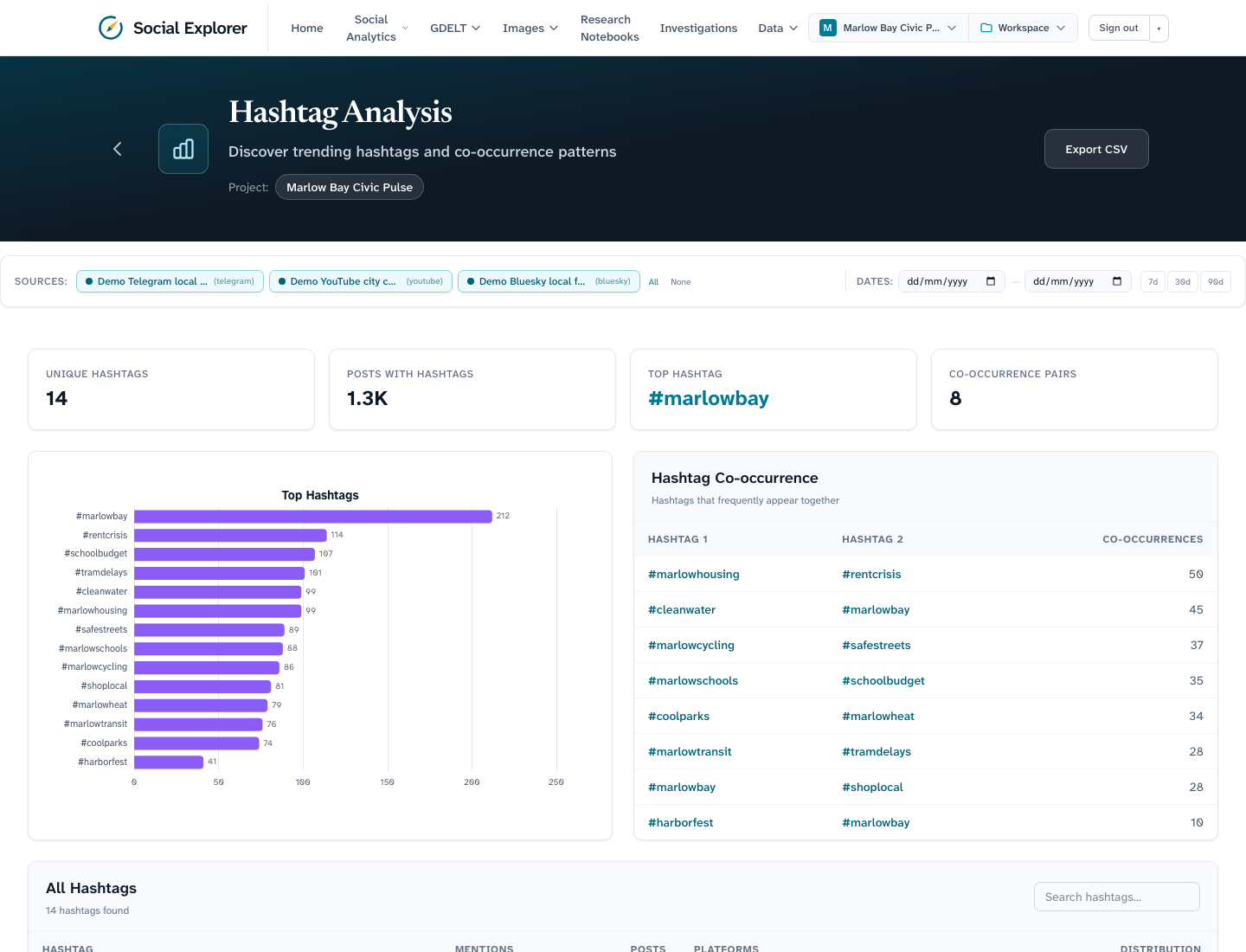
Hashtags

Hashtags

Which tags travel together and how they trend.

Phrases

Phrases

The recurring three-word phrases behind a topic.

Try it

See it with data in one command

The demo starts a throwaway database, loads about 1,500 synthetic posts across 90 days for a fictional coastal city, and opens the app on your machine with a generated sign-in.

  • Needs Node 22 and Docker, nothing else
  • Runs on localhost only
  • Remove it any time with npm run demo -- --reset
Terminal
# get it
$ git clone https://github.com/spiculedata/social-explorer.git
$ cd social-explorer/ex-accell-ui

# start the demo, then open http://localhost:5173
$ npm run demo

Built on parts you already trust

PostgreSQL + pg_duckdb

One database, with a columnar engine for fast analytics

SvelteKit

A fast web app with roles: admin, user and viewer

Jupyter

Notebooks next to your data

Docker Compose

Self-host the whole stack

Your data, your server, your analysis

Social Explorer is Apache-2.0 licensed and runs wherever you can run Docker. It is young, and the gaps are tracked in the open.

Released under the Apache License 2.0.